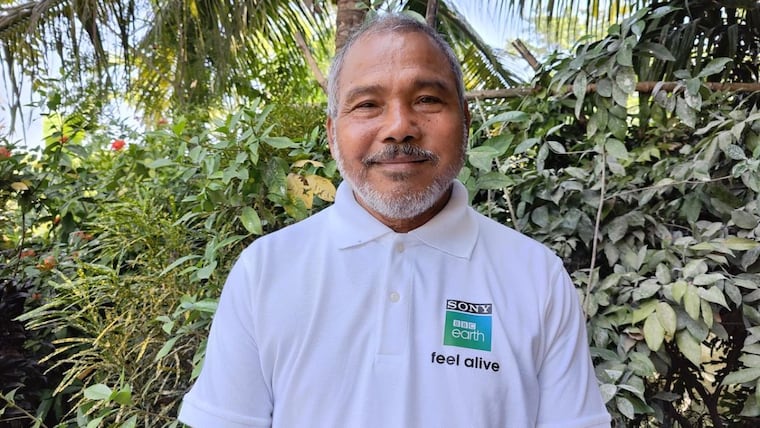
In the state of Assam, India, a remarkable environmental transformation has unfolded, originating from the determination of a single individual. Jadav “Molai” Payeng, now widely recognized as the “Forest Man of India,” began a life-changing mission in 1979 that ultimately turned a barren sandbar into an expansive forest sanctuary.
At just 16 years old, Payeng witnessed the devastating effects of severe flooding on the Brahmaputra River’s sandbar, where hundreds of dead snakes lay exposed to the harsh sun without any shade. Motivated to act, he embarked on a decades-long endeavor to plant bamboo and native tree species, aiming to combat soil erosion and create shelter for displaced wildlife.
A Growing Legacy of Conservation
For over 40 years, Payeng’s unwavering commitment saw him planting trees daily, nurturing the once-lifeless land into a thriving ecosystem. His efforts culminated in the creation of the Molai Forest, which now spans roughly 1,360 acres. This vast green expanse exceeds the size of New York City’s Central Park, which covers about 843 acres.
The flourishing forest has become a vital habitat for an array of wildlife, including elephants, Indian rhinoceroses, Bengal tigers, and numerous bird species. Such biodiversity highlights the profound ecological impact of Payeng’s work, transforming what was once a sandy wasteland into a vibrant refuge.
Molai’s story gained broader recognition in 2007 when photographer and journalist Jitu Kalita encountered the forest while documenting Majuli Island. This discovery brought attention to Payeng’s extraordinary environmental contribution and inspired a deeper appreciation for grassroots conservation efforts in India.