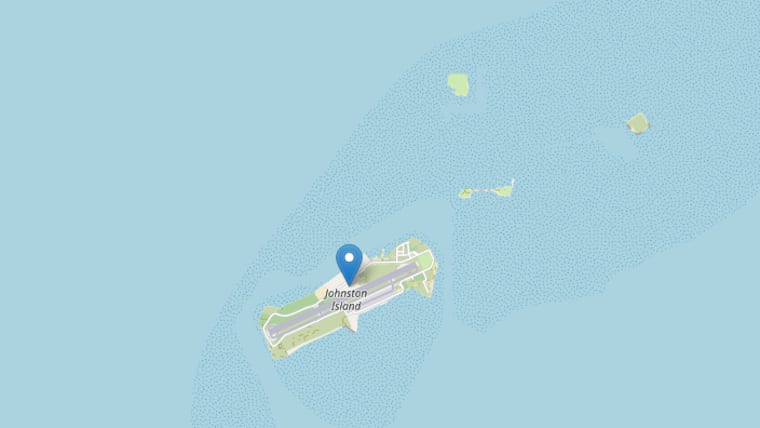
L’atoll Johnston, une petite masse de terre isolée nichée dans l’immense océan Pacifique entre les îles Marshall et Hawaï, porte un héritage complexe. Autrefois poste militaire secret et site d’essais nucléaires dangereux durant la Guerre froide, l’atoll s’est depuis transformé en un sanctuaire florissant pour près de 500 espèces sauvages.
Sous la juridiction des États-Unis en tant que territoire non incorporé, l’île Johnston a servi à des fins militaires de 1934 jusqu’en 2000. La notoriété de l’île a atteint son apogée en 1962, lors du sommet de la Guerre froide, lorsque les États-Unis ont lancé l’Opération Dominic, une série de 36 détonations nucléaires dans le Pacifique. Sur celles-ci, dix fusées ont été détonées avec succès à l’atoll Johnston, tandis que quatre dysfonctionnements ont entraîné une contamination radioactive importante.
Les conséquences de ces essais furent particulièrement préoccupantes, car les débris radioactifs issus des lancements défaillants ont été éliminés en les déversant directement dans l’océan Pacifique environnant. À l’époque, l’Enquête radiologique de l’atoll Johnston (JARS) estimait que l’élimination en mer des déchets radioactifs était une méthode appropriée pour contrôler le risque radiologique, reflétant les pratiques et la compréhension de cette période.
De la contamination à la conservation
Des décennies après la fin des activités nucléaires et l’abandon de l’île, l’atoll Johnston a connu une remarquable récupération écologique. N’étant plus un site d’opérations militaires ou d’élimination de déchets radioactifs, l’atoll est devenu un refuge vital pour une diversité d’espèces marines et terrestres. Ce retournement souligne la résilience de la nature à reprendre possession et à restaurer même les environnements les plus lourdement impactés.
Aujourd’hui, l’atoll Johnston se présente comme l’une des réserves naturelles les plus isolées de la planète, soutenant une impressionnante variété de près de 500 espèces. Son évolution, passant d’un site nucléaire de la Guerre froide à un sanctuaire florissant, souligne à la fois l’importance historique et la valeur écologique contemporaine de ce petit atoll du Pacifique.