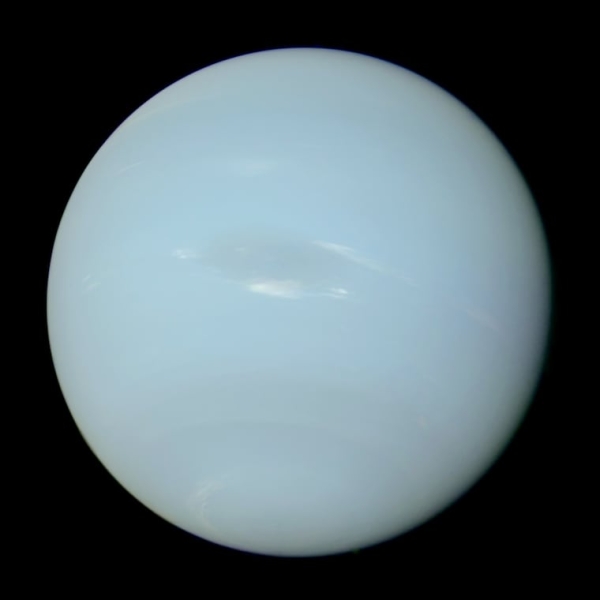
Les planètes énigmatiques Uranus et Neptune, traditionnellement classées comme les géants de glace du système solaire, suscitent désormais une réévaluation de leurs structures internes et de leur composition. Depuis des décennies, ces mondes lointains sont décrits comme ayant des atmosphères riches en hydrogène et en hélium, enveloppant de épaisses couches glacées d’eau, d’ammoniac et de méthane, le tout entourant des noyaux rocheux denses. Cependant, de récentes investigations scientifiques suggèrent que cette compréhension conventionnelle pourrait nécessiter une révision importante.
Situés dans notre système solaire, ces deux planètes ont longtemps fasciné les chercheurs en raison de leurs propriétés uniques et de leurs caractéristiques mystérieuses. De nouvelles découvertes, axées sur leurs champs magnétiques anormaux et leur distribution de chaleur atypique, remettent en question les hypothèses précédentes sur leur composition, laissant entrevoir la possibilité que leurs intérieurs soient différents de tout ce que l’on avait imaginé jusqu’à présent.
Repenser la nature des géants de glace
Les recherches émergentes proposent qu’au lieu d’être dominés par d’immenses manteaux glacés, les intérieurs d’Uranus et de Neptune pourraient contenir de vastes océans de magma sous leurs couches extérieures. Dans ce modèle révisé, les atmosphères des planètes, toujours principalement composées d’hydrogène et d’hélium, recouvrent ces couches fondues, suggérant une complexité dans leur dynamique interne qui reste encore à comprendre pleinement.
Cette nouvelle perspective remet non seulement en question le paradigme traditionnel des géants de glace, mais souligne également combien il reste à découvrir sur les planètes de notre propre voisinage cosmique. Alors que la communauté scientifique continue d’explorer ces mondes lointains, chaque révélation nous rapproche de la compréhension de la véritable nature d’Uranus et de Neptune, des planètes qui recèlent des secrets bien au-delà des étiquettes simples que nous leur avons attribuées.