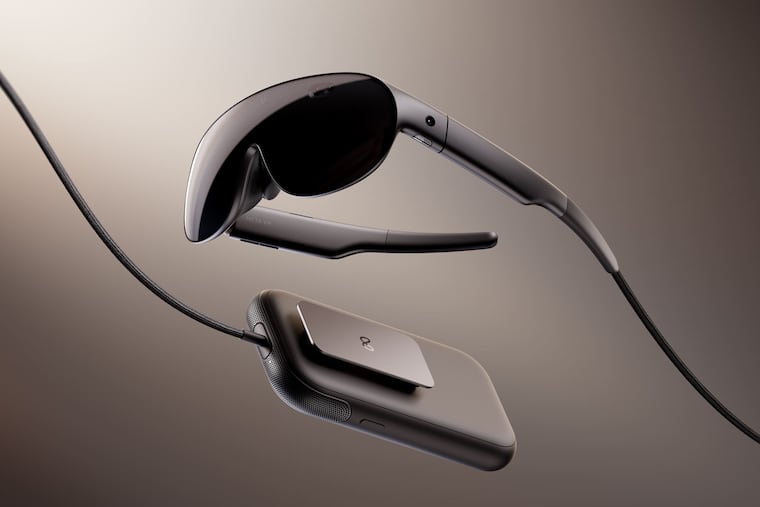
Meta has unveiled a breakthrough in virtual reality hardware designed to significantly ease the discomfort of prolonged use. At Meta Connect 2026, the company introduced the Meta VR Glasses, an innovative device weighing approximately 100 grams, which is roughly one-fifth the weight of the popular Quest 3 headset.
Unlike conventional VR headsets that consolidate all components into a single bulky unit, Meta’s new design divides the technology between two elements. The glasses, which rest on the user’s head, contain the essential screens and sensors, while a separate external module houses the processor, battery, and storage. This secondary unit weighs around 300 grams and can be conveniently carried in a pocket or bag, connecting to the glasses via a thin optical cable.
A breakthrough in wearable design
By relocating most of the hardware off the head, Meta addresses one of the most persistent challenges in virtual reality: the strain caused by wearing heavy equipment for extended periods. The Meta VR Glasses take on the appearance of oversized spectacles rather than the typical headset, marking a significant shift in VR device aesthetics and ergonomics.
Despite the dramatic reduction in weight, the glasses do not compromise on visual performance. Each eye is served by a micro-OLED display with a resolution of 2,412 x 2,288 pixels, capable of refresh rates up to 120 Hz, and a pixel density of 37 pixels per degree. The device runs on Qualcomm’s Snapdragon Reality Elite platform, supported by 12 GB of RAM and 128 GB of internal storage, which can be expanded through a microSD card.
Battery life for the Meta VR Glasses reaches up to three hours when delivering high-resolution content, offering users a balance between portability and immersive experience.