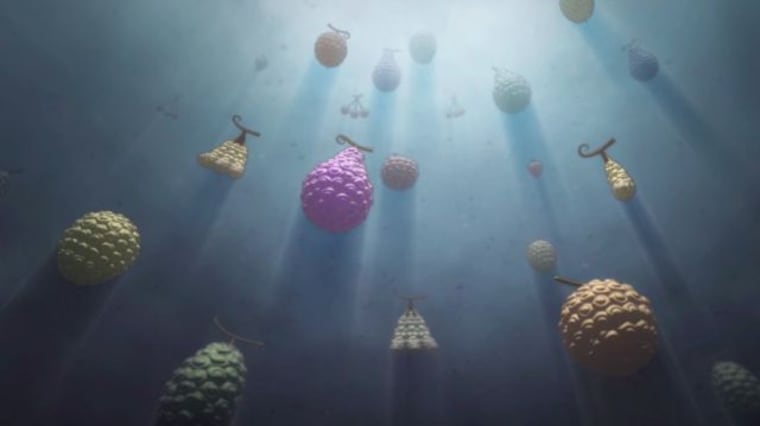
Within the expansive universe of ‘One Piece’, Devil Fruits—known in Japanese as akuma no mi—remain a cornerstone of the series’ mythology. These enigmatic fruits bestow remarkable abilities upon those who consume them, while simultaneously stripping away their capacity to swim and rendering them vulnerable in seawater. Each Devil Fruit is singular in nature, with no duplicates, and categorized into three primary classes based on their powers: Paramecia, Logia, and Zoan.
Conventionally, Logia-type Devil Fruits—which allow users to transform into natural elements or substances—were regarded as the most formidable. However, as the narrative has advanced, Mythical Zoan fruits have emerged as a force to be reckoned with, signaling a shift in the hierarchy of power. This evolution is especially evident in the climactic phases of the story, marked by Monkey D. Luffy’s awakening of the Hito Hito: Model Nika fruit, showcasing the creative ingenuity of Eiichiro Oda.
Mythical Zoan: A New Pinnacle of Power
The Mythical Zoan-type Devil Fruits have elevated the Zoan category beyond its traditional boundaries. Unlike standard Zoan fruits that grant animal transformations, these Mythical variants endow users with godlike or legendary creature attributes, amplifying their combat prowess and versatility. This transformation, paired with unique abilities, has placed their wielders in a distinguished tier, distinct from other Devil Fruit users.
In this context, the three most potent Zoan-type fruits stand apart, each granting its user unparalleled strength and abilities that influence the balance of power within the One Piece world. As the saga unfolds, the prominence of these fruits underscores their significant role in the overarching conflict and character development.
Through the lens of these Mythical Zoan fruits, Eiichiro Oda continues to expand the series’ mythos, redefining what it means to wield a Devil Fruit and pushing the boundaries of power in the world of One Piece.